
How EMDR Can Help You Even If You Don’t Think You Have Trauma
Eye Movement Desensitization and Reprocessing Therapy (EMDR), is a method widely-known for it’s usefulness in treating trauma. Even if you don’t think you have gone through anything traumatic, it could still be helpful for you too.
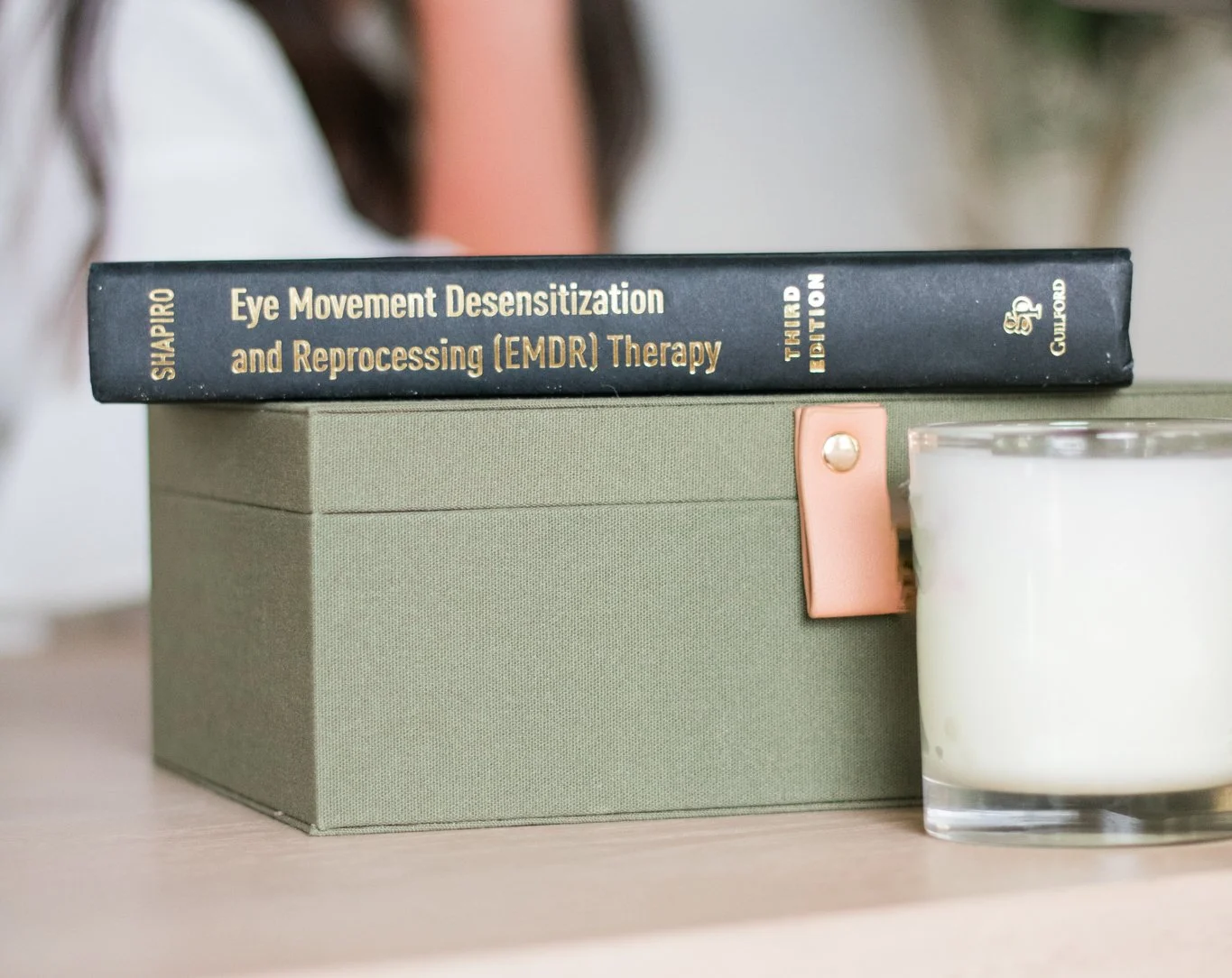
You may not think you went through anything “that bad”. Maybe you had a great childhood, and you love your life overall. Since that is the case, you’re wondering why you still feel on edge all the time, why you always feel like you’re not doing enough, and why it’s hard for you to be authentic in your relationships.
You may not think you have trauma, but your nervous system is telling a different story.
Trauma Isn’t Just About What Happened, It’s About How It Was Processed
According to the founder of EMDR, Francine Shapiro, trauma is “A disturbing event that’s had a lasting negative effect upon self and psyche”.
This could be a “Big T” trauma like a life-threatening situation or abuse, or it could also be…
Something someone has said to you that has always stuck with you
A time when you were left out or bullied
Being praised only when you achieved and ignored when you didn’t
Learning early that your needs didn’t matter or your feelings were “too much”
These experiences may not sound overly dramatic, but if they have not been “fully digested” by your brain, they can still impact you in the present. Over time these experiences can shape how you see yourself, others and the world. If an experience felt overwhelming, lonely, or defeating, your nervous system might still be carrying it.
This could be why you logically know your worth, but you struggle to actually feel it and believe it. Or, it might be why you struggle to rely on anyone or share your true feelings.
EMDR is Like Organizing a Closet
EMDR helps your brain process these experiences so that your nervous system isn’t holding on to feelings and thoughts from the past. It uses bilateral stimulation such as guided eye movements, alternating tapping, or tones that move from side to side. Research has shown that bilateral stimulation helps “stuck” memories feel less distressing and move the brain toward more adaptive information.
It’s like when you have a messy closet in your house where things are just shoved in there with no rhyme or reason. Every time you go to open it or put something in, some of your things come tumbling down.
When your closet is packed full and unorganized, even small things can set you off. Maybe it is your kid asking for one more thing, your partner pulling away from a hug before you, a friend not texting you back, or a colleague giving you constructive criticism. Though these things seem small, when your nervous system is overwhelmed and memories haven’t been organized and digested yet, it doesn’t take much for things to come tumbling down.
EMDR helps you organize the closet by taking things out, sorting them, putting them into bins, and putting them back into the closet more neatly. When everything is organized, you are less sensitive to the day-to-day triggers and are more equipped to handle everyday challenges.
EMDR for High-Functioning, Burned-Out Women
Though some high-functioning women would not describe themselves as traumatized, they still see patterns from their past showing up in the present. They might describe themselves as anxious, exhausted, overstimulated, easily triggered, constantly responsible for everyone else. On the outside they’re thriving, but on the inside, they feel like they’re barely keeping their head above water.
EMDR helps untangle those old patterns. It can reduce emotional reactivity, ease guilt and shame, increase self-trust, strengthen boundaries, and help you respond instead of react. In many ways, it helps you step out of quiet survival mode and finally feel steady again.
Even if you haven’t been through anything you believe was traumatic, you still deserve to heal from your past. If you think EMDR might be a good fit for you, click here to schedule a free consultation.

Hi, I’m Raechel, EMDR therapist based in Arizona.
In our work together, I will help you not only know you are enough, but actually feel it. You won’t need to find ways to prove your worth to others, because you will be confident in yourself. You will be able to trust yourself in your decisions and live in a way that actually lines up with your values. You will be able to stop the spirals of overthinking and seeking reassurance so you can spend more energy on the things that actually matter to you.
You will finally add your name to the list of people to take care of.